Introduction To Chords

Up until this point, we have been playing individual notes one at a time. When you play more than one note at a time, this is called a chord. Chords are the building blocks of songs. It is important to introduce you to commonly played chords early in your studies. The sooner you learn basic chords, the sooner you can play the songs you want. This keeps you motivated and interested in the learning process. I am going to show you the most common and most easily played chords in popular music. You will be surprised how many of the songs you love contain these chords.
Chords are portrayed in vertical diagram form (shown below). The chord diagram represents the top part of the guitar neck. The vertical lines are the strings, and the horizontal lines are the frets. The dots show you where your fingers go, and the number in the dot tells you which finger to use there. To review, the pointer finger is 1, middle finger is 2, ring finger is 3, and pinkie is 4. If there is an O above a string, this is an open string, so strum it along with the others. If there is a X above a string, that string is not to be played at all. The red dots are the roots, or the notes that share the name of the chord. For example: In a C chord, the roots (red dots) would be the "C" notes in that chord.
When making these chords, first place your fingers in the correct place and then pick one note at a time to ensure that each note can be heard clearly, then give it one strum across the strings to hear the whole chord. If a note is not coming out clear, it is one of three things:
1. Either you are not pressing down hard enough.
2. You are not pressing your finger down directly behind the fret.
3. The string is hitting another finger which is preventing its vibration.
The proper way to play chords is to arch your fingers "up" and come straight down on the strings. Some chords are harder than others, so don't be discouraged if some seem impossible at first. They will not stay that way.
Also, it is important to note that you shouldn't work on a specific chord for more than a few minutes. Move on to the next one and come back to it tomorrow. Muscle memory is built through repetition. Below are chord diagrams for all the basic major and minor chords on your guitar. Without getting into theory just yet, the best way to look at the difference between major and minor chords is that major chords sound "happy" and minor chords sound "sad." These chords are your bread and butter. All competent guitar players have these memorized and have them available at an instant. This is your goal. Learn them. Love them. Make them a piece of you.
This course is free
Create an account and every lesson unlocks — the full video, tabs, jam tracks, and practice songs. No membership needed.
This download is for members
Membership ships with the Teleport Pedal, so you can play these songs with the rest of the community — and unlocks every download on GuitarGate.
- Teleport Pedal included — yours to keep
- Unlimited song downloads & exports
- Full access to the entire course library
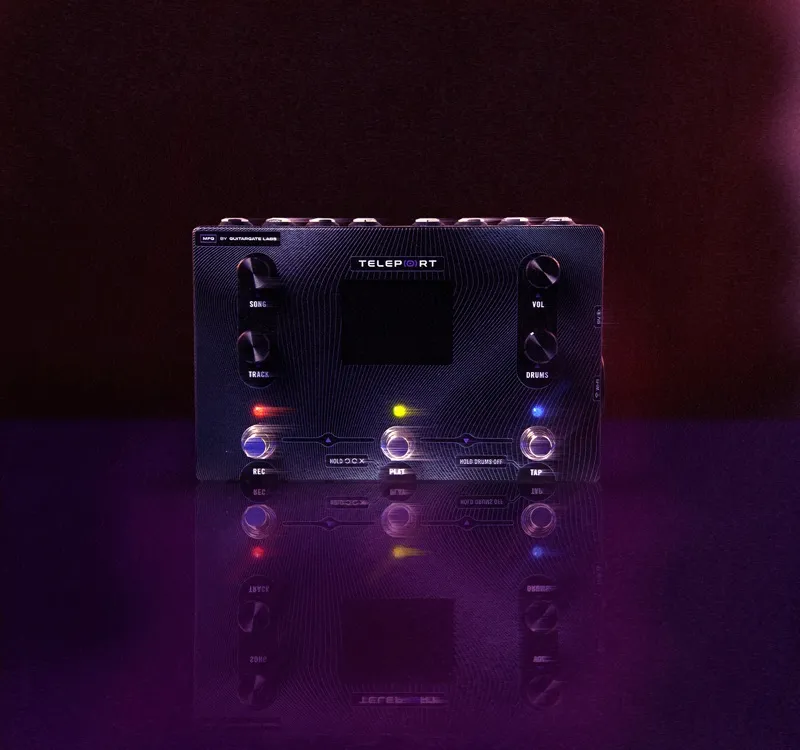
You need a Teleport pedal for this
Downloading songs sends them straight to your Teleport. Grab a pedal to jam these songs alongside the rest of the community.
- Sync and download songs straight to your pedal
- Collaborate: add your own take to community songs
- The pedal is yours to keep forever
★ 4.9 stars across 138 reviews
Register your Teleport
Already have a Teleport? Open the GuitarGate app to register it — or scan the QR code on the box to get started.
Open app to register